3D Printing Explained: Learn Additive Manufacturing Overview, Material Selection Advice, Printing Techniques, and Innovation Facts
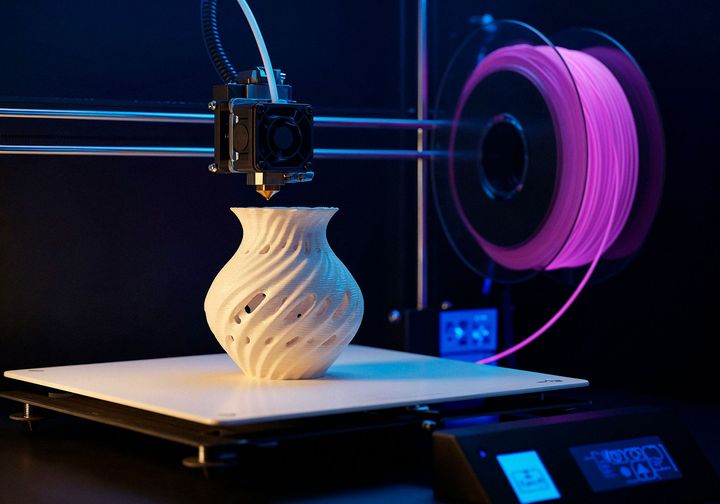
3D printing, also known as additive manufacturing, is a manufacturing process that creates three-dimensional objects by building material layer by layer from a digital design. Unlike traditional manufacturing methods that often remove material through cutting or machining, additive manufacturing solutions add material only where it is needed.
Understanding 3D Printing and Why It Exists
The technology was developed to improve design flexibility, reduce material waste, and enable the creation of complex shapes that may be difficult or impossible to produce through conventional methods. Over time, 3D printing technology has evolved from a prototyping tool into a widely used manufacturing method across multiple industries.
Today, industrial 3D printers can produce components for aerospace, healthcare, automotive, education, engineering, and consumer products. The growth of advanced software, improved hardware, and diverse 3D printing materials has expanded the capabilities of additive manufacturing around the world.
Why 3D Printing Matters Today
Modern industries increasingly require customization, rapid development cycles, and efficient material usage. These demands have contributed to the growing importance of additive manufacturing.
Some key challenges addressed by 3D printing include:
- Reducing manufacturing waste
- Supporting rapid product development
- Enabling customized designs
- Simplifying complex component production
- Improving supply chain flexibility
- Supporting research and innovation
The technology affects a wide range of stakeholders, including engineers, manufacturers, researchers, educators, healthcare professionals, and product designers. Aerospace 3D printing, for example, allows the production of lightweight components that can contribute to improved fuel efficiency and design optimization.
Major Types of 3D Printing Technologies
Different printing methods are used depending on the material, precision requirements, and intended application.
| Technology | Common Material | Typical Applications |
|---|---|---|
| FDM (Fused Deposition Modeling) | Thermoplastic Filaments | Education, prototyping, product design |
| SLA (Stereolithography) | Liquid Resin | High-detail models, dental applications |
| DLP (Digital Light Processing) | Photopolymer Resin | Precision parts and prototypes |
| SLS (Selective Laser Sintering) | Nylon Powder | Functional engineering components |
| DMLS/SLM | Metal Powders | Aerospace and industrial manufacturing |
| Binder Jetting | Powder Materials | Complex industrial parts |
| Material Jetting | Photopolymers | Detailed visual models |
FDM remains one of the most recognized methods and frequently uses materials supplied by specialized 3D printer filament suppliers. Meanwhile, resin 3D printing services often rely on SLA and DLP technologies to achieve highly detailed outputs.
Material Selection in 3D Printing
Selecting appropriate materials is one of the most important decisions in additive manufacturing.
Common categories of 3D printing materials include:
| Material Category | Characteristics | Common Uses |
|---|---|---|
| PLA | Easy to print, biodegradable | Educational models |
| ABS | Durable and impact-resistant | Functional prototypes |
| PETG | Chemical resistance and strength | Engineering applications |
| Nylon | Flexibility and toughness | Mechanical parts |
| Resin | High detail and smooth finish | Medical and design models |
| Stainless Steel | Strength and durability | Industrial components |
| Titanium | Lightweight and strong | Aerospace applications |
| Aluminum | Low weight and corrosion resistance | Transportation industries |
Material selection depends on factors such as:
- Mechanical strength requirements
- Heat resistance
- Surface finish expectations
- Environmental conditions
- Regulatory compliance
- Intended product lifespan
Metal 3D printing services frequently utilize titanium, stainless steel, and aluminum alloys for advanced engineering projects.
Benefits and Applications of 3D Printing
The adoption of additive manufacturing continues to grow because of its flexibility and versatility.
Key Benefits
- Reduced material waste
- Faster design iteration
- Greater customization opportunities
- Ability to produce complex geometries
- Lower inventory requirements
- Enhanced prototyping capabilities
Common Applications
Healthcare
Medical professionals use 3D printing for anatomical models, dental devices, surgical planning, and customized medical solutions.
Aerospace
Aerospace 3D printing supports lightweight structures, engine components, and research into advanced materials.
Automotive
Manufacturers use additive manufacturing for prototyping, tooling, and performance testing.
Education
Educational institutions use 3D printing technology to teach engineering, design, and manufacturing concepts.
Architecture
Architects create detailed scale models to visualize projects and communicate designs.
Industrial Manufacturing
Commercial 3D printing supports production workflows, tooling development, and specialized component fabrication.
Top 5 Leading Provider Companies
Several organizations have played significant roles in advancing additive manufacturing technology globally.
| Company | Primary Focus |
|---|---|
| Stratasys | Industrial additive manufacturing systems |
| 3D Systems | Enterprise printing technologies and healthcare solutions |
| EOS GmbH | Industrial polymer and metal additive manufacturing |
| HP Inc. | Multi Jet Fusion printing technology |
| Desktop Metal | Metal additive manufacturing innovation |
These companies contribute to the development of industrial 3D printers, advanced software platforms, and next-generation manufacturing technologies used across numerous sectors.
Recent Updates and Industry Trends
The past year has seen several notable developments within the additive manufacturing sector.
Increased Adoption of Artificial Intelligence (2025–2026)
Manufacturers have increasingly integrated artificial intelligence into design optimization, predictive maintenance, and print quality monitoring systems. AI-assisted workflows are helping improve efficiency and consistency.
Growth in Aerospace Manufacturing (2025)
Aerospace organizations continued expanding the use of metal additive manufacturing for lightweight structural components and engine systems. This trend reflects ongoing efforts to improve performance and reduce material consumption.
Sustainable Material Development (2025)
Research institutions and manufacturers introduced additional recyclable and bio-based materials designed to support environmental sustainability objectives.
Expansion of Large-Scale Printing Systems (2025–2026)
Industrial users adopted larger-format systems capable of producing sizable components for construction, transportation, and manufacturing sectors.
Digital Manufacturing Integration (2026)
Many organizations are integrating additive manufacturing solutions into broader digital manufacturing ecosystems, combining cloud-based design, automation, and data analytics.
Industry Trend Overview
| Trend | Industry Impact |
|---|---|
| AI Integration | Improved efficiency and quality control |
| Sustainable Materials | Reduced environmental impact |
| Metal Printing Expansion | Broader industrial applications |
| Automation | Higher production consistency |
| Digital Manufacturing | Enhanced workflow management |
Laws, Regulations, and Government Policies
3D printing operates within a framework of regulations that vary by country and industry.
Product Safety Regulations
Manufactured components must comply with relevant safety and performance standards. Requirements are particularly important in healthcare, aerospace, and transportation sectors.
Intellectual Property Protection
Digital design files may be subject to copyright, patent, trademark, and intellectual property laws. Organizations must ensure proper authorization when reproducing protected designs.
Export Control Requirements
Certain advanced manufacturing technologies and materials may be governed by export regulations in some jurisdictions.
Quality Management Standards
Industries often rely on standards such as:
- ISO 9001 Quality Management
- ISO/ASTM 52900 Additive Manufacturing Standards
- Industry-specific aerospace and medical certifications
Government Innovation Programs
Many countries support additive manufacturing through research grants, technology initiatives, educational programs, and advanced manufacturing strategies designed to encourage innovation and competitiveness.
Helpful Tools and Resources
A variety of tools support learning and implementation within the 3D printing ecosystem.
| Resource Type | Examples |
|---|---|
| CAD Software | Fusion 360, SolidWorks, FreeCAD |
| Slicing Software | Cura, PrusaSlicer, Simplify3D |
| File Repositories | Thingiverse, Printables |
| Material Databases | MatWeb, Material Data Center |
| Design Validation Tools | Meshmixer, Netfabb |
| Learning Resources | Educational institutions, industry publications |
Useful resource categories include:
- Material selection guides
- Design optimization tools
- Manufacturing calculators
- Engineering reference libraries
- Industry standards databases
- Research publications
Frequently Asked Questions
What is additive manufacturing?
Additive manufacturing is a production process that creates objects by adding material layer by layer based on a digital model rather than removing material from a larger piece.
What materials can be used in 3D printing?
Common materials include plastics, resins, nylon, stainless steel, titanium, aluminum, and specialized engineering materials designed for industrial applications.
How does metal 3D printing differ from plastic printing?
Metal printing typically uses powdered metals and advanced laser-based technologies, while plastic printing often relies on thermoplastic filaments or liquid resins.
Which industries use 3D printing most frequently?
Healthcare, aerospace, automotive, education, architecture, engineering, and industrial manufacturing are among the most active users of additive manufacturing technologies.
Is 3D printing environmentally friendly?
The technology can reduce material waste compared with some traditional manufacturing methods. However, environmental impact depends on factors such as material selection, energy consumption, recycling practices, and production scale.
Conclusion
3D printing has evolved from a specialized prototyping method into a significant manufacturing technology with applications across numerous industries. Through additive manufacturing solutions, organizations can create complex components, support innovation, improve design flexibility, and optimize production processes.
Advances in industrial 3D printers, metal manufacturing systems, resin technologies, and sustainable materials continue to expand the possibilities of additive manufacturing. As digital manufacturing ecosystems become more connected and regulatory frameworks mature, 3D printing technology is expected to remain an important part of modern engineering, research, healthcare, and industrial development.
Informational Disclaimer: Any references to industrial equipment, manufacturing programs, technology platforms, implementation budgets, or operational packages are general informational estimates only.