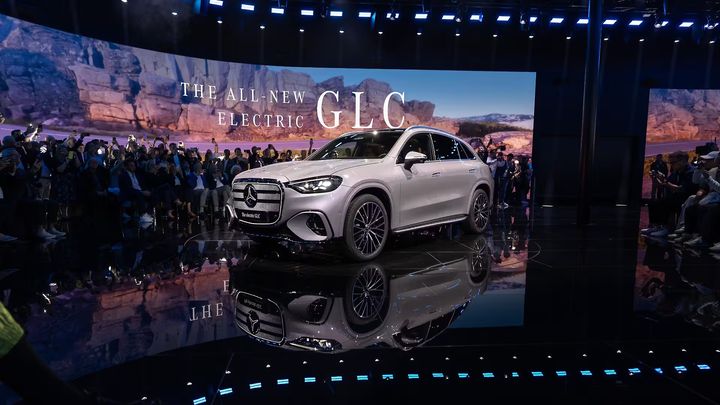
Explore Mercedes-Benz GLC Electric: A Complete Guide to Features, Facts, and Insights
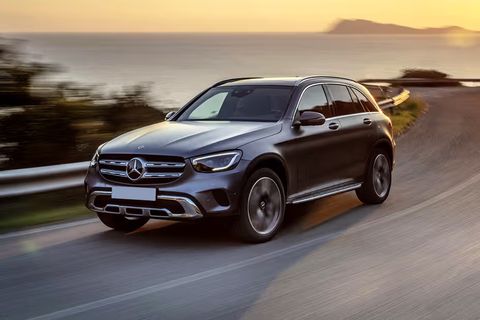
The Mercedes-Benz GLC Electric is an all-electric luxury SUV developed for drivers who want the comfort, technology, and practicality associated with the GLC nameplate without relying on a conventional petrol or diesel engine.
Understanding the Mercedes-Benz GLC Electric
It represents the transition toward battery-powered mobility, combining electric propulsion with modern digital features, driver assistance technology, and an SUV-style cabin.
Unlike a traditional combustion-engine vehicle, an electric SUV uses an electric motor powered by energy stored in a rechargeable battery. This design eliminates tailpipe emissions during driving and can reduce the number of mechanical components associated with engine maintenance. However, the overall environmental impact also depends on electricity generation, battery production, and the vehicle's full life cycle.
The Mercedes-Benz GLC Electric belongs to the luxury electric SUV category, where buyers commonly compare driving range, charging speed, passenger comfort, software features, safety systems, and long-distance practicality.
One frequently discussed specification is the Mercedes-Benz GLC Electric 715 km range. This figure should be interpreted carefully: a published range generally relates to a specific test cycle, configuration, and market. It is not a guarantee of the distance achievable on every journey. Drivers should verify the exact model specification and certified range applicable to their country.
How an Electric SUV Works
The main components of a battery-electric SUV include:
Battery pack: Stores electricity used to propel the vehicle.
Electric motor: Converts electrical energy into motion.
Power electronics: Control energy delivery between the battery and motor.
Charging system: Receives electricity from compatible charging equipment.
Regenerative braking: Recovers some energy during deceleration and sends it back to the battery.
Thermal management: Helps maintain suitable operating temperatures for the battery and other components.
These systems work together to provide smooth acceleration, energy management, and quieter operation compared with many conventional vehicles.
Importance: Why Electric SUV Technology Matters
Interest in electric vehicles has grown as governments, manufacturers, and consumers examine alternatives to petroleum-based transportation. For urban commuters, families, and frequent highway travelers, an electric SUV can provide useful driving range, cabin comfort, and access to increasingly developed charging networks.
The Mercedes-Benz GLC Electric is relevant to drivers considering the balance between luxury features and everyday electric mobility.
Range and Everyday Driving
The Mercedes GLC Electric range is an important factor when assessing whether a vehicle suits daily travel and longer journeys. However, the usable distance between charging stops depends on several conditions:
Driving speed and acceleration
Outside temperature and weather
Air-conditioning or heating use
Passenger and luggage load
Road gradients and traffic
Wheel and tire configuration
Battery condition and charging habits
A certified range provides a standardized comparison, while actual driving results can vary considerably.
For example, a driver who mainly travels short urban distances may have different charging needs from someone who regularly drives on highways. Both should consider the availability of charging facilities along their normal routes.
Battery Technology and Charging
The GLC EV battery is central to the vehicle's range, performance, and long-term ownership experience. Battery capacity, expressed in kilowatt-hours (kWh), describes the amount of energy the pack can store. Charging power, expressed in kilowatts (kW), describes how quickly energy can be transferred under suitable conditions.
These are different measurements. A larger battery can store more energy, but the time required to charge it also depends on the vehicle's charging limits, the charger, battery temperature, and the charging level at the start.
Common charging options include:
Home AC charging: Suitable for overnight charging where a compatible installation is available.
Public AC charging: Often used at workplaces, shopping destinations, and parking facilities.
DC fast charging: Can add energy more quickly on compatible vehicles and charging networks, particularly during suitable battery charge levels.
Charging from a very low battery level to full capacity generally takes longer than adding a moderate amount of energy during a highway stop. Charging speeds also tend to decrease as the battery approaches full charge.
Electric SUV Features and Passenger Comfort
The equipment available in the Mercedes-Benz GLC Electric depends on the particular model, trim, and market. Prospective owners should verify the official specification rather than assume that every feature is standard.
Features worth evaluating include:
Digital instrument displays and infotainment
Smartphone connectivity and navigation
Driver assistance and parking aids
Cabin climate control and seating comfort
Battery preconditioning, where equipped
Regenerative braking settings
Connected-vehicle functions and software updates
Luggage capacity and rear passenger space
These features can influence convenience, but their usefulness depends on individual driving habits and regional equipment availability.
Recent Updates: Developments in 2025 and 2026
The electric GLC has moved from a global product announcement toward market-specific introductions, making the latest official specifications particularly relevant to Indian readers.
Key developments include:
September 2025: Mercedes-Benz introduced the new electric GLC in its international lineup, highlighting an updated design, digital technology, and a claimed WLTP range of up to 715 km for the GLC 400 4MATIC.
September 2026: Mercedes-Benz confirmed that the electric SUV would launch in India on November 4, 2026, with local assembly planned at its Chakan facility in Pune.
October 2026: Indian automotive publications reported that bookings had opened ahead of the planned November launch. The India-bound model was announced in the GLC 400 4MATIC configuration.
Expected Technical Specifications
The following figures describe the announced GLC 400 4MATIC configuration. Buyers should confirm final India-specific specifications with the manufacturer.
Specification | Announced information |
|---|---|
Powertrain | Dual-motor electric |
Battery capacity | 94 kWh |
Claimed maximum range | Up to 715 km (WLTP) |
Drive system | All-wheel drive |
Combined output | Approximately 360 kW |
Maximum torque | 800 Nm |
0–100 km/h acceleration | Approximately 4.3 seconds |
Electrical architecture | 800 volts |
These specifications are based on published international and India-launch reporting. The WLTP figure is a standardized test result, not a promise of real-world range.
The vehicle's announced 800-volt architecture is designed to support high-power DC charging when compatible charging infrastructure and suitable battery conditions are available. The actual charging time depends on the charger's output, the vehicle's charging curve, temperature, and battery state of charge.
Laws and Policies Affecting Electric SUVs in India
Electric vehicle ownership in India is influenced by national vehicle regulations, state policies, insurance requirements, and the availability of charging infrastructure. These rules can change, so drivers should check the latest official guidance before making financial or registration decisions.
Important regulatory considerations include:
Vehicle registration and safety: Electric passenger vehicles must comply with applicable Indian motor vehicle requirements, including relevant homologation and safety standards.
Motor insurance: Owners must comply with applicable third-party motor insurance requirements. Comprehensive coverage, battery protection, and charging-related coverage depend on the selected policy wording.
Charging infrastructure: Home charging installations should follow applicable electrical safety requirements and use compatible equipment installed appropriately for the property's electrical capacity.
PM E-DRIVE scheme: India's PM Electric Drive Revolution in Innovative Vehicle Enhancement scheme supports specified electric vehicle categories and charging infrastructure. Eligibility and incentives depend on the scheme's current provisions; a premium electric SUV should not automatically be assumed to qualify for a purchase incentive.
State EV policies: State-level incentives, road-tax concessions, and registration-related benefits may differ by location, vehicle category, and policy period.
For buyers considering EV financing or an electric car loan, the applicable interest rate, down payment, repayment period, fees, and lender conditions should be reviewed independently. Battery warranty coverage should also be checked for its duration, mileage limits, capacity-retention conditions, and exclusions.
Tools and Resources for Electric SUV Planning
Several resources can help prospective owners understand the practical requirements of electric mobility.
Official Mercedes-Benz website: Check the model specification, owner's documentation, charging compatibility, warranty terms, and market-specific equipment.
EV charging station maps: Locate public chargers along regular routes and check connector compatibility, charging power, and current availability where shown.
Range calculators: Estimate driving needs using daily distance, expected energy consumption, weather, and reserve battery capacity.
Charging calculators: Estimate charging duration using battery capacity, charger power, and charging efficiency. Actual charging speed may vary.
Electric vehicle insurance comparison tools: Review policy exclusions, battery-related protection, roadside assistance, and charging-equipment coverage.
EV financing calculators: Compare illustrative monthly repayments using the loan amount, annual interest rate, and repayment term.
Government portals: Consult the Ministry of Heavy Industries, Ministry of Road Transport and Highways, and relevant state transport departments for current policies and requirements.
Illustrative calculation: If a vehicle uses 20 kWh per 100 km, a 100 km journey requires approximately 20 kWh of battery energy under those assumed conditions. Electricity drawn from the grid may be higher because of charging losses. This is an example, not a measured efficiency figure for the GLC Electric.
Informational disclaimer: This article is for education purpose only. Any estimates for insurance premiums, loan repayments, charging expenditure, or vehicle prices are informational only. Actual figures depend on location, provider terms, vehicle configuration, taxes, and individual circumstances.
Frequently Asked Questions
1. What is the claimed range of the Mercedes-Benz GLC Electric?
The GLC 400 4MATIC has a published WLTP range of up to 715 km. Real-world distance depends on driving conditions, climate control, speed, and other factors.
2. What is the battery capacity of the GLC EV?
The announced GLC 400 4MATIC configuration uses a 94 kWh battery pack. The usable capacity and final market-specific details should be confirmed in the official specification.
3. How can the Mercedes GLC Electric be charged?
It supports compatible AC charging and DC fast charging. Charging duration depends on charger power, battery temperature, starting charge level, and the vehicle's charging limits.
4. Is the Mercedes-Benz GLC Electric available in India?
Mercedes-Benz has announced an Indian launch date of November 4, 2026. Availability, delivery timelines, final specifications, and official pricing should be verified with the manufacturer.
5. What should buyers check before choosing an electric SUV?
Compare certified range, charging access, battery warranty, insurance coverage, safety equipment, financing terms, luggage capacity, and the availability of charging facilities on frequently used routes.
Conclusion
The Mercedes-Benz GLC Electric illustrates how luxury SUVs are adapting to battery-powered mobility. Its announced 94 kWh battery, 715 km maximum WLTP range, dual-motor configuration, and advanced digital features provide useful starting points for understanding its capabilities.
However, a vehicle's suitability depends on more than its headline specifications. Charging access, real-world range, insurance, financing, warranty conditions, and local regulations all influence the ownership experience.
By checking official specifications and using realistic driving and charging estimates, readers can make a more informed assessment of the Mercedes-Benz GLC Electric and the wider electric SUV market.