Explore Labeling Machines: A Complete Guide to Basics, Tips, and Industrial Insights
Labeling machines are industrial devices designed to apply printed labels to products, containers, packages, and other surfaces. They are widely used in manufacturing, food processing, pharmaceuticals, cosmetics, beverages, chemicals, and logistics. Labels communicate important information, including product names, ingredients, batch numbers, manufacturing dates, barcodes, handling instructions, and regulatory details.
Introduction to Labeling Machines
As production lines become more automated, businesses increasingly use labeling equipment to improve consistency and coordinate packaging operations. An industrial labeling machine may operate independently or connect with filling, capping, inspection, printing, and packaging equipment.
Different applications require different machine designs. For example, an automatic bottle labeling machine supplier may work with equipment designed for cylindrical containers, while pharmaceutical labeling equipment suppliers typically focus on precise label placement and traceability requirements.
Understanding labeling technology helps manufacturers compare equipment specifications, evaluate production requirements, and identify appropriate machinery for their operations.
How Labeling Machines Work
Most labeling systems follow a sequence of basic operations:
Product feeding: Containers or packages move into the labeling area through a conveyor or feeding mechanism.
Label preparation: A label roll or sheet feeds into the application system.
Position detection: Sensors identify the product's location and, where applicable, orientation.
Label application: A roller, tamping mechanism, air applicator, or wrapping system places the label on the surface.
Verification: Sensors or inspection cameras check label presence, position, or printed information.
Product discharge: Labeled products continue to the next production stage.
The exact process depends on the machine design, container shape, label material, adhesive, and production environment.
Importance of Labeling Machines in Modern Industry
Labeling machines support accurate product identification and organized packaging operations. Their importance extends beyond appearance because labels often contain information needed for distribution, traceability, consumer understanding, and regulatory compliance.
Industries That Use Labeling Equipment
Food and beverages: Bottles, jars, cartons, cans, ingredient information, and expiry dates.
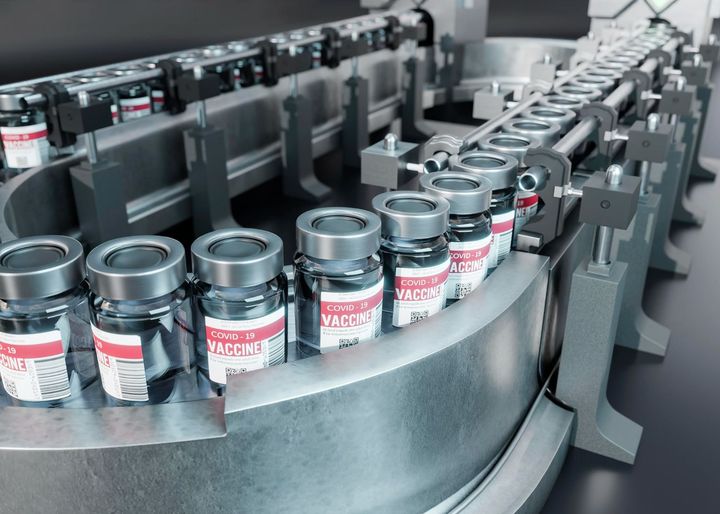
Pharmaceuticals: Vials, medicine bottles, cartons, and identification labels.
Cosmetics: Cream containers, perfume bottles, personal-care products, and decorative packaging.
Chemicals: Containers requiring hazard symbols, handling instructions, and product identification.
Logistics: Shipping labels, barcodes, inventory identifiers, and warehouse tracking.
Industrial manufacturing: Components, spare parts, electrical equipment, and asset identification.
Main Operational Benefits
Automatic labeling equipment can help maintain consistent label placement, support repeatable production processes, and reduce repetitive manual handling. When integrated with suitable inspection technology, it can also help identify missing, damaged, or incorrectly positioned labels.
However, results depend on machine configuration, operator training, label quality, maintenance, and product characteristics. Automation does not eliminate the need for quality checks.
Common Labeling Machine Types
| Machine type | Typical applications | Important consideration |
|---|---|---|
| Manual labeling machine | Small batches and basic operations | Operator consistency |
| Semi-automatic labeling machine | Moderate production volumes | Manual product loading |
| Automatic labeling machine | Continuous production lines | Conveyor synchronization |
| Rotary labeling machine | High-throughput container processing | Container handling and format changes |
| Wraparound labeling machine | Cylindrical bottles and containers | Label overlap and alignment |
| Front-and-back labeling machine | Flat bottles, jars, and containers | Accurate product orientation |
| Vial labeling machine | Pharmaceutical and laboratory containers | Small-label accuracy and traceability |
| Print-and-apply system | Cartons, pallets, and shipping packages | Data integration and print verification |
Machine suitability depends on the required output, container dimensions, label format, available floor space, and production-line design.
Recent Updates and Industrial Trends
During 2025 and 2026, labeling and packaging operations continued to be influenced by automation, digital traceability, inspection technology, and sustainability requirements. Specific equipment releases and regulatory deadlines should be verified against manufacturer announcements and official publications before being treated as confirmed developments.
Automation and Smart Inspection
Modern labeling systems increasingly combine sensors, programmable logic controllers (PLCs), machine vision, and production monitoring. These technologies can support label-position checks, barcode verification, and the detection of certain packaging defects.
Manufacturers evaluating automatic labeling system integration should examine compatibility with existing conveyors, enterprise systems, production databases, and inspection equipment.
Digital Identification and Traceability
Barcodes, QR codes, and serialized identifiers help connect physical packages with digital product records. In regulated industries, labeling and identification systems may form part of broader traceability processes.
The practical requirements vary by product category and destination market. A QR code alone does not establish regulatory compliance; the encoded information, label content, recordkeeping, and implementation must also meet applicable requirements.
Material Efficiency and Flexible Packaging
Packaging manufacturers are exploring lighter label materials, recyclable packaging combinations, and label designs that work with different container formats. These changes can require adjustments to adhesive selection, application pressure, sensor settings, and label-feeding mechanisms.
For equipment planners, flexibility is important because a machine designed for one container and label combination may require additional tooling or configuration changes for another.
Data-Driven Maintenance
Production monitoring can help maintenance teams identify repeated stoppages, sensor faults, or inconsistent label application. These records can support preventive maintenance schedules and reduce avoidable interruptions when used alongside regular inspections.
The availability and effectiveness of these features vary by equipment model and factory configuration.
Laws, Policies, and Labeling Requirements
Labeling machinery must be selected and configured with the rules applicable to the products and markets involved. Regulations generally govern label information and product identification rather than requiring every manufacturer to use a particular machine design.
India: Packaging and Product Labeling
In India, manufacturers should consider the following regulatory frameworks, where applicable:
Legal Metrology (Packaged Commodities) Rules, 2011: These rules establish declarations for many prepackaged commodities, including applicable requirements for manufacturer or packer details, net quantity, and other prescribed information.
Food Safety and Standards Authority of India (FSSAI): Food businesses must follow applicable food labeling and display requirements, including relevant provisions of the Food Safety and Standards (Labelling and Display) Regulations, 2020, as amended.
Central Drugs Standard Control Organisation (CDSCO): Pharmaceutical labeling requirements depend on the applicable drug laws, rules, product category, and regulatory conditions.
Bureau of Indian Standards (BIS): Certain products may be subject to applicable Indian standards or compulsory certification and marking requirements.
Environmental regulations: Plastic packaging and extended producer responsibility requirements may affect packaging materials and labeling practices, depending on the business and product.
Requirements can change through amendments, notifications, and category-specific rules. Manufacturers should consult the latest official publications before finalizing label artwork or production procedures.
International Considerations
Businesses exporting products may also need to consider destination-specific rules. Examples include European Union food-information requirements, applicable chemical hazard labeling rules, and pharmaceutical serialization or traceability requirements in relevant jurisdictions.
A labeling machine can help apply approved information accurately, but it cannot independently ensure that the information itself is legally correct.
Tools and Resources for Equipment Planning
Before approaching industrial labeling machinery manufacturers, production teams should prepare a clear specification describing their packaging requirements.
Useful Technical Resources
Machine specification sheets: Compare supported container dimensions, label sizes, operating modes, changeover procedures, and electrical requirements.
Production calculators: Estimate required throughput by dividing target daily output by available production time. Allow for planned breaks, changeovers, and downtime.
PLC and sensor documentation: Review compatibility with conveyors, product-detection sensors, and line-control systems.
Machine vision and barcode verification tools: Determine whether the application requires presence detection, barcode reading, optical character recognition, or label-position inspection.
Maintenance checklists: Record cleaning, roller condition, sensor alignment, adhesive buildup, belt tension, and scheduled component inspections.
Regulatory resources: Consult official FSSAI, CDSCO, Legal Metrology, BIS, and destination-market publications for applicable labeling rules.
Questions to Ask Equipment Manufacturers
When evaluating industrial labeling machine suppliers or an industrial labeling equipment distributor, consider:
Which container shapes, materials, and label sizes are supported?
What is the rated speed, and what output is achievable with the intended product?
How are label placement and missing-label errors detected?
What format changes are required between different products?
Can the machine connect with existing production controls and inspection systems?
Which installation, operator training, spare-part, and maintenance arrangements are available?
What documentation covers safety, electrical requirements, and routine maintenance?
Pharmaceutical packaging machinery suppliers may need to address additional requirements for validated processes, controlled documentation, data integrity, and traceability.
Understanding Equipment Price Quotations
A labeling machine price quotation can vary according to automation level, throughput, label dimensions, container handling, inspection features, and integration complexity.
For preliminary planning, request itemized quotations from relevant manufacturers, including the machine configuration, installation scope, training, optional components, applicable taxes, and warranty terms. High-speed equipment may require additional conveyor modifications or line-control integration.
Informational disclaimer: This article is just for informational only. Any price quotation or budget estimate is indicative until a supplier confirms the specifications, scope, location, taxes, and applicable commercial terms. No universal price applies to all labeling machines.
Frequently Asked Questions
What is an industrial labeling machine?
It is equipment that applies labels to products, containers, or packages. Depending on its design, it may support manual, semi-automatic, or fully automatic production processes.
Which labeling machine is suitable for bottles?
The appropriate choice depends on bottle shape, dimensions, label material, required output, and the number of label positions. Wraparound machines often suit cylindrical bottles, while front-and-back systems can suit containers with defined flat surfaces.
How do manufacturers determine labeling machine capacity?
Capacity is usually expressed in units per minute or units per hour. Actual throughput depends on product spacing, label dimensions, container stability, inspection requirements, and production-line interruptions. Always distinguish rated speed from demonstrated output under real operating conditions.
What should pharmaceutical manufacturers consider?
They should evaluate label accuracy, batch and expiry information, serialization requirements where applicable, inspection systems, documentation, and compatibility with the relevant quality-management processes. Regulatory specialists should confirm the requirements for each product and market.
How often should labeling machines be maintained?
Maintenance frequency depends on operating hours, machine design, environmental conditions, and manufacturer instructions. Routine checks may include cleaning sensors, inspecting rollers and belts, checking label-feed alignment, and examining wear components. A documented preventive maintenance schedule helps maintain consistent operation.
Conclusion
Labeling machines play an important role in modern packaging, product identification, and manufacturing traceability. Options range from manual equipment to high-speed rotary systems, specialized vial machines, and integrated print-and-apply solutions.
Selecting suitable equipment requires an understanding of container geometry, label materials, required throughput, inspection needs, maintenance procedures, and applicable regulations. Reviewing technical documentation and comparing clearly defined specifications can help production teams make informed decisions.
As automation and digital identification continue to develop, manufacturers should assess new capabilities against actual production requirements rather than assuming that every advanced feature is necessary. Accurate label content, appropriate equipment configuration, trained operators, and regular quality checks remain central to dependable labeling operations.